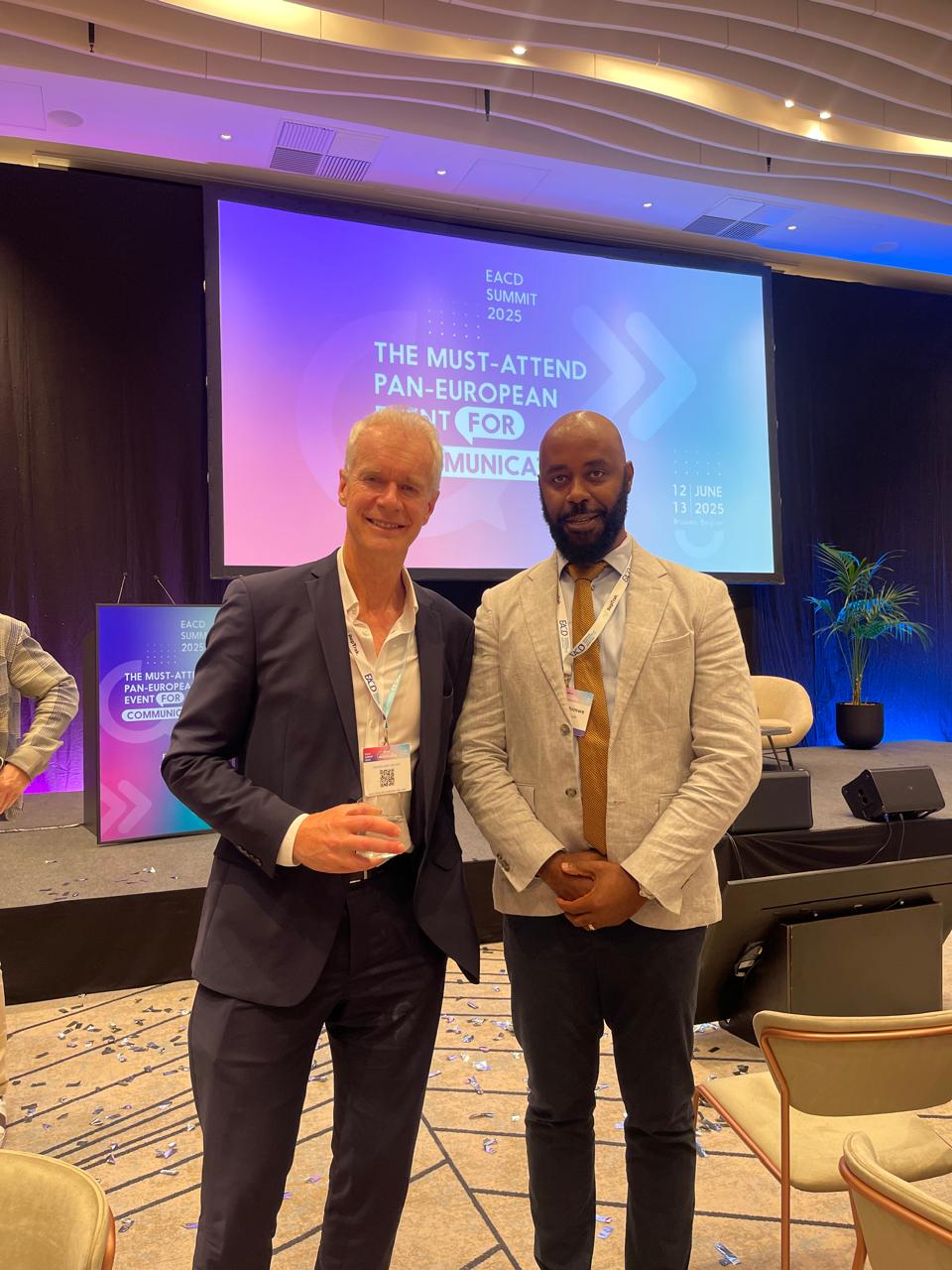
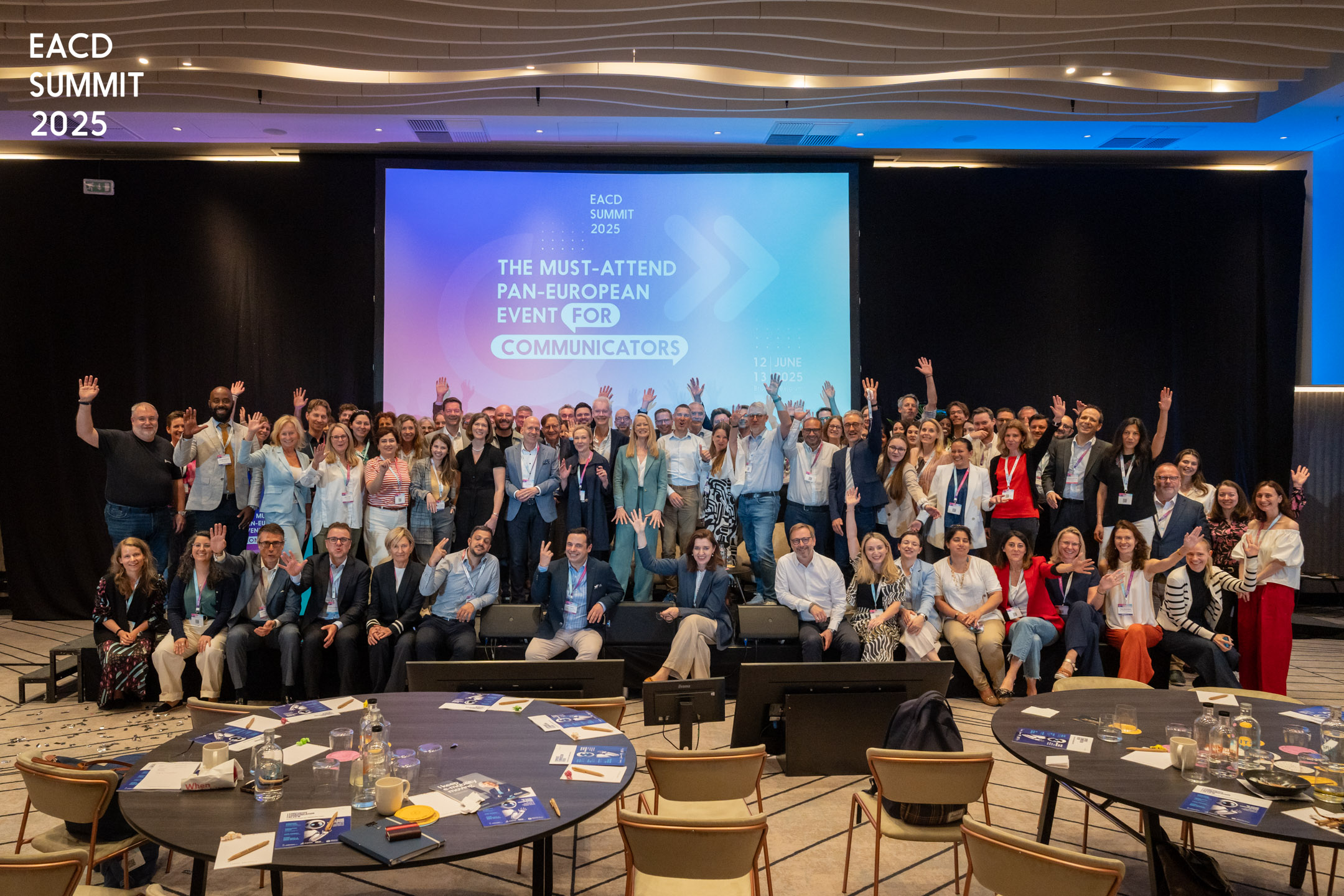
Brussels, June 14, 2025 — The 2025 European Association of Communication Directors (EACD) Summit wrapped up this week at Cardo Brussels, drawing senior communication professionals from across Europe under the theme “From Purpose to Pragmatism.” Among the participants was Brandstaun, ta strategic communications advisory, represented by co-founder Euloge Ishimwe.
The two-day summit explored how communication leaders are navigating a world marked by geopolitical disruption, digital transformation, cultural polarization, and eroding public trust. Through a series of high-level keynotes, scenario workshops, and fireside panels, participants tackled pressing questions: How should brands position themselves amid global uncertainty? Can communicators still lead with purpose without being naïve to realpolitik?
The programme featured influential voices such as Kim Larsen (ING), Chris Hogg (Nestlé), Marthe Skaar (Norges Bank Investment Management), Nomi Bar-Yaacov (International Negotiator), and veteran journalist Stephen Sackur, renowned for his time hosting BBC’s HardTalk.
“The recent EACD Summit, again in Brussels, was a success. I enjoyed every session I attended. The organizing team did fantastic job: the event was rich in insights, strong on engagement, and featuring both seasoned industry leaders and prominent figures like Stephen Sackur, former host of BBC’s HARDtalk,” Ishimwe said after the summit.
For Ishimwe, Sackur’s presence brought a full-circle moment. “Years ago at the IFRC, my then-manager Robert Kaufman and I created an internal fireside chat series inspired by HardTalk,” he recalled. “I was the host, and Stephen Sackur was my model. To meet him in person after his keynote, share that story, and discuss some of his most compelling interviews—it was surreal.”
In line with the summit’s theme, Brandstaun also contributed to the intellectual dialogue through a an op-ed title “Rethinking Influence: Why Strategic Communications Needs a Reset.” The piece argues that traditional communications models—focused on visibility and message control—are no longer sufficient. Instead, influence today must be earned through trust, organizational behavior, internal alignment, and emotional resonance.
“Influence has shifted from being a by-product of visibility to a strategic asset rooted in credibility,” Ishimwe writes. “Communicators must now lead not just campaigns, but culture.”
As companies grapple with stakeholder fragmentation, AI disruption, and growing scrutiny of brand ethics, the summit made clear that communications leadership is both more challenged—and more essential—than ever.
Contact:
For media inquiries or to request a briefing on Brandstaun’s post-summit reflections, please contact:
info@brandstaun.com | www.brandstaun.com